

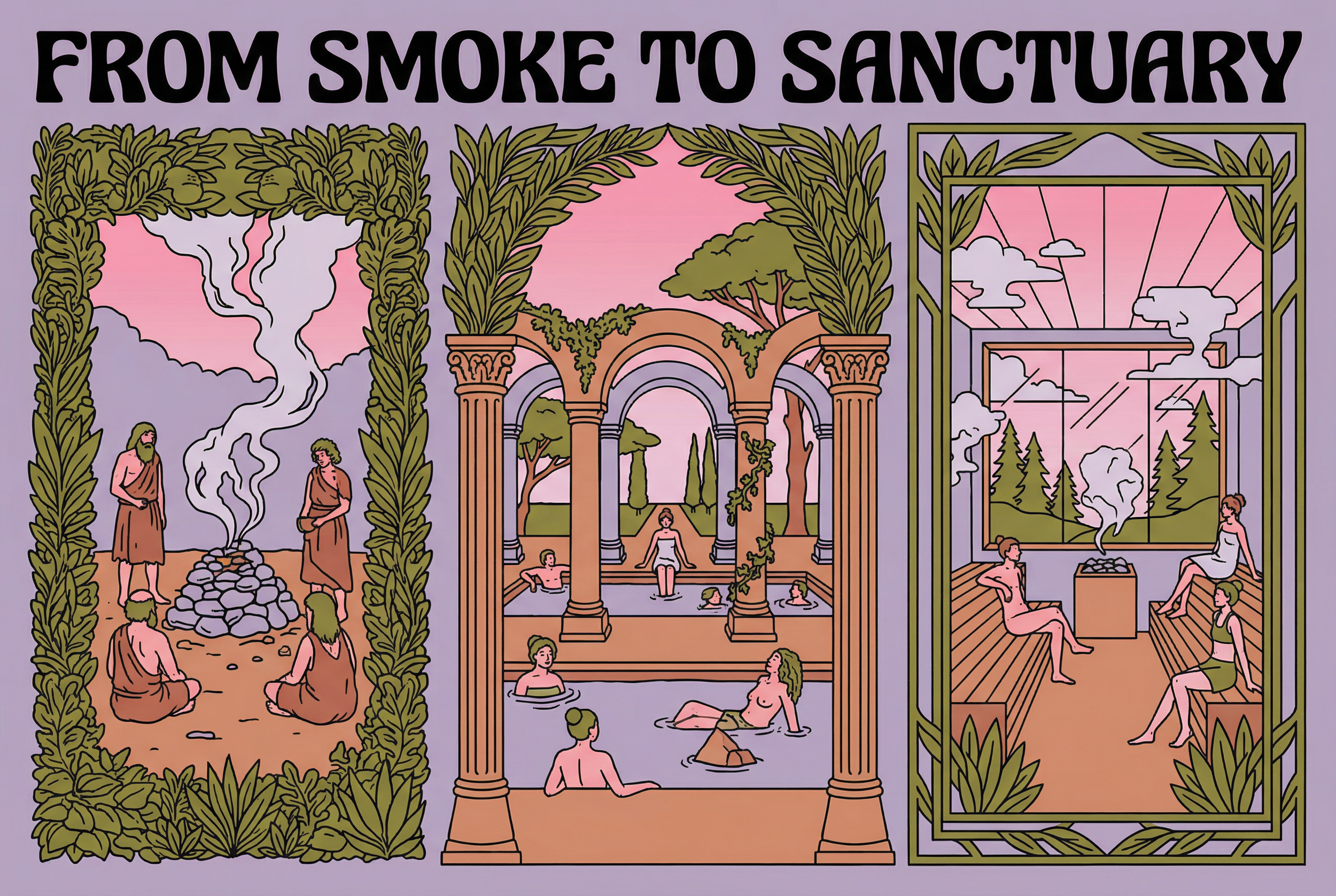
The sauna is more than just a hot room; it's a cultural institution, a place of healing, and a sanctuary for the soul. Its history is as rich and complex as the steam that rises from the hot stones, with roots that stretch back thousands of years. In this article, we'll embark on a journey through time to explore the fascinating history of the sauna, from its humble beginnings as a simple smoke pit to its modern incarnation as a global wellness phenomenon.
The Dawn of Sauna: Ancient Origins
The story of the sauna begins in Finland, where the earliest evidence of sweat bathing dates back over 10,000 years.[1] The first saunas, known as savusaunas or smoke saunas, were simple pits dug into the earth. A fire was lit inside to heat a pile of rocks, and once the rocks were glowing hot, the smoke was vented, and the bathers would enter to bask in the radiant heat, or löyly.[2]
These early saunas were not just for bathing; they were central to daily life. They were used for cooking, for giving birth, and for healing the sick. The sauna was considered a sacred space, a place of purification and renewal, where the boundaries between the physical and spiritual worlds were blurred.[3]
The Evolution of Sauna: From Smoke to Steam
Over the centuries, the design of the sauna evolved. The simple pit sauna gave way to the log hut, and the open fire was replaced by a wood-burning stove with a chimney. This innovation allowed for better control over the temperature and humidity, and it made the sauna experience more comfortable and accessible.
The 20th century brought further advancements, with the invention of the electric sauna stove in the 1950s. This made it possible to have a sauna in almost any home, and it helped to popularise the sauna around the world. Today, there are an estimated three million saunas in Finland, a country of just 5.5 million people.[4]
Sauna Culture Around the World
While Finland is the undisputed heartland of sauna culture, sweat bathing traditions have emerged in many other parts of the world as well. The Russian banya, the Turkish hammam, and the Native American sweat lodge are all variations on the theme of sweat bathing, each with its own unique rituals and traditions.
In recent years, the sauna has experienced a global renaissance, as more and more people discover its profound health benefits. From reducing stress and improving cardiovascular health to boosting the immune system and promoting detoxification, the sauna is a powerful tool for enhancing well-being.
The Enduring Allure of the Sauna
From its ancient origins as a simple smoke pit to its modern incarnation as a luxurious spa amenity, the sauna has remained a constant in human culture. It is a testament to our enduring fascination with the transformative power of heat, and a reminder of the importance of taking time to care for our bodies and our souls.
As we continue to navigate the complexities of modern life, the sauna offers a much-needed sanctuary, a place to disconnect from the noise of the world and reconnect with ourselves. It is a tradition that has stood the test of time, and one that will undoubtedly continue to enrich our lives for generations to come.
References
[1] BBC. (2023, October 25). The 10,000-year-old origins of the sauna – and why it's still going strong.
[2] Finnish Sauna Builders. (n.d.). What Is the History of Saunas: Tracing Their Origins.
[3] Kailo, K. (2025). On Finnish Sauna Culture, History and Herstory. In Sauna Culture, Sweat and Spirituality. Springer.
[4] Wikipedia. (n.d.). Finnish sauna.