

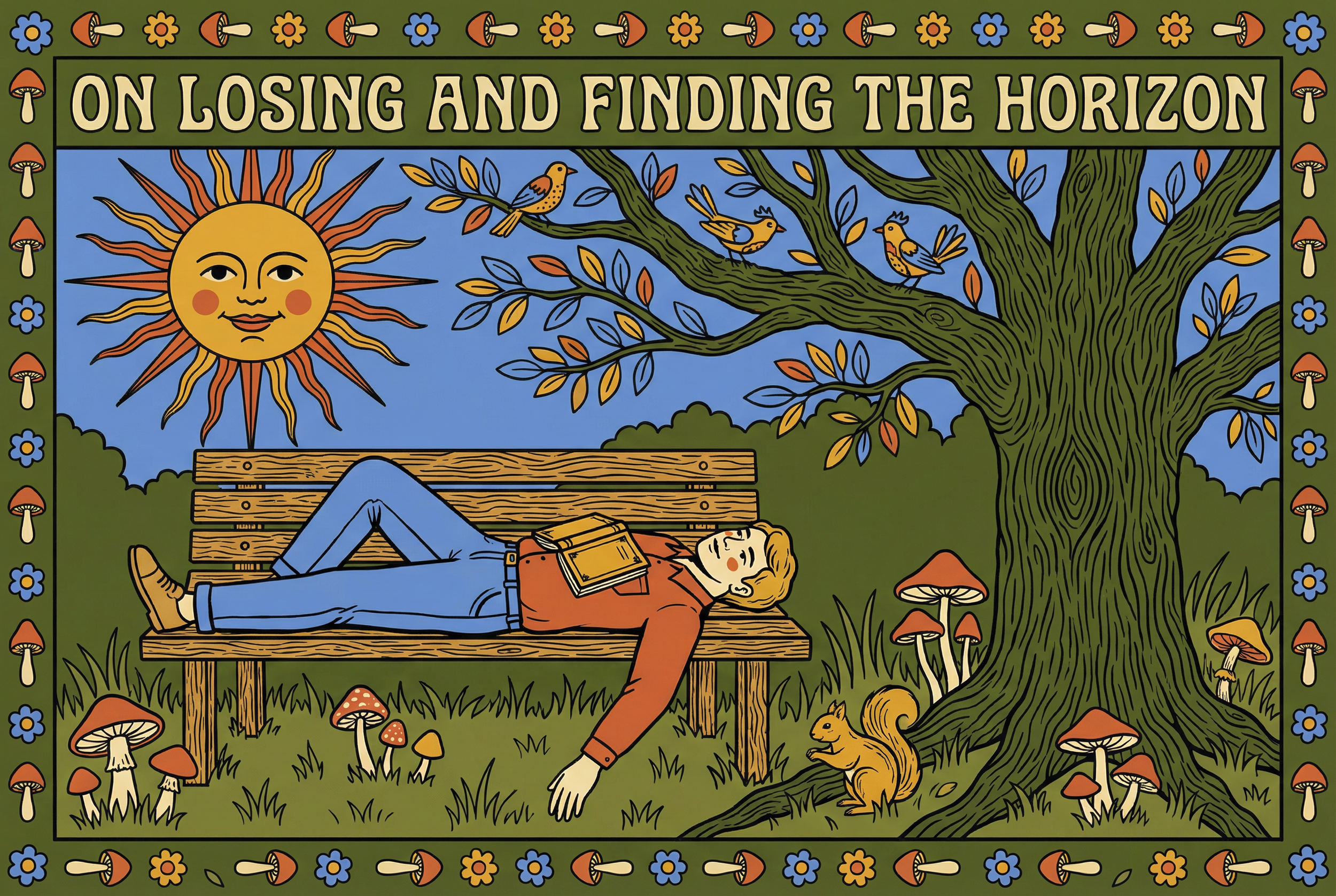
One begins to feel, after a time, like a ghost at a banquet. You watch the courses arrive, you hear the chatter and the clinking of glasses, but the food itself, the substance of the thing, remains tantalizingly out of reach. For weeks, this spectral sensation had been my constant companion. The world, it seemed, was in the grip of a fever dream, one conjured by the relentless hum of servers and the incantations of programmers. Artificial intelligence, a concept that had once been the comfortable furniture of my escapist reading, had burst forth from the pages of science fiction and into the stark, unforgiving light of the daily news. It was no longer a pleasant diversion; it was the weather.
Science fiction had always been my preferred method of retreat, a carefully constructed labyrinth in which to lose myself. The very strangeness of it, the sheer distance from my own reality, was the source of its comfort. But now, that distance had collapsed. The imagined futures of AI, once a source of detached intellectual curiosity, now felt like a series of increasingly accurate weather forecasts for a storm gathering just over the horizon. The escapism had soured, turning into a constant, low-grade confrontation with a future I felt powerless to shape.
This left me in a state of profound inertia. My work, the small edifice of meaning I had built for myself, felt like a sandcastle against a rising tide. What is the purpose of a single, carefully chosen word when the language itself is being rewritten by a machine? The game was changing, the rules were being redrawn by an invisible hand, and I was left feeling like a player in a game I no longer understood.
It all came to a head on a Tuesday in February, a day of such oppressive greyness that the city itself seemed to have given up.
My rebellion was a quiet one. A trip to the park. A book. And, as a small concession to the strangeness of the times, a carefully measured dose of mushrooms – not enough for a journey, but perhaps enough to shift the furniture of my mind, to offer a new vantage point. The book was Asimov's Foundation, a relic from a future that felt, in its own way, as distant and unattainable as the past.
And here was the strange, unsettling irony that began to dawn on me as I walked through the park's skeletal winter beauty. In Asimov's sprawling galactic empire, a civilization so advanced it could map the currents of history, there was a conspicuous absence. There was no AI. The men and women who navigated this future, who plotted and schemed and loved and betrayed, did so with the same flawed, unpredictable, stubbornly human software that I was running. They spoke and acted and felt in a cadence I recognized, a human cadence. And the contrast with my own time, with the unnerving speed of our own technological ascent, was jarring. It made our present feel more alien than Asimov's future.
I found a bench, a lonely outpost in a sea of green, and lay down, placing the book on my chest. The mushrooms began their subtle work, a gentle loosening of the knots of my perception. The world did not dissolve into a kaleidoscope of colours. Instead, it sharpened. The intricate cartography of the bark on the ancient tree above me, the delicate architecture of a bird's nest, the almost imperceptible shimmer of frost on the grass – details I had been blind to, drowned out by the noise of my own thoughts.
For a few hours, I was adrift, a willing castaway on the island of the present moment. The grand, terrifying narrative of progress, of AI and the future of humanity, receded. It was still there, a distant hum on the horizon, but it had lost its power to define me. I was simply a body on a bench, a book rising and falling with the rhythm of my breath, the cold air a sharp, clean reminder of my own existence.
As the light began to fail, a single, insistent question began to form in my mind, a question that seemed to hold the entire, dizzying paradox of the day. Am I just a young man in a park on mushrooms, or are things really moving that fast?